Sketches from Cook it Raw: The Lichen

The lichen that carpets the floor of the Lapland forests is plush and pliant, moist and springy to the touch. It blooms in jade-toned terrestrial clouds, swallowing our footsteps and muting our voices.
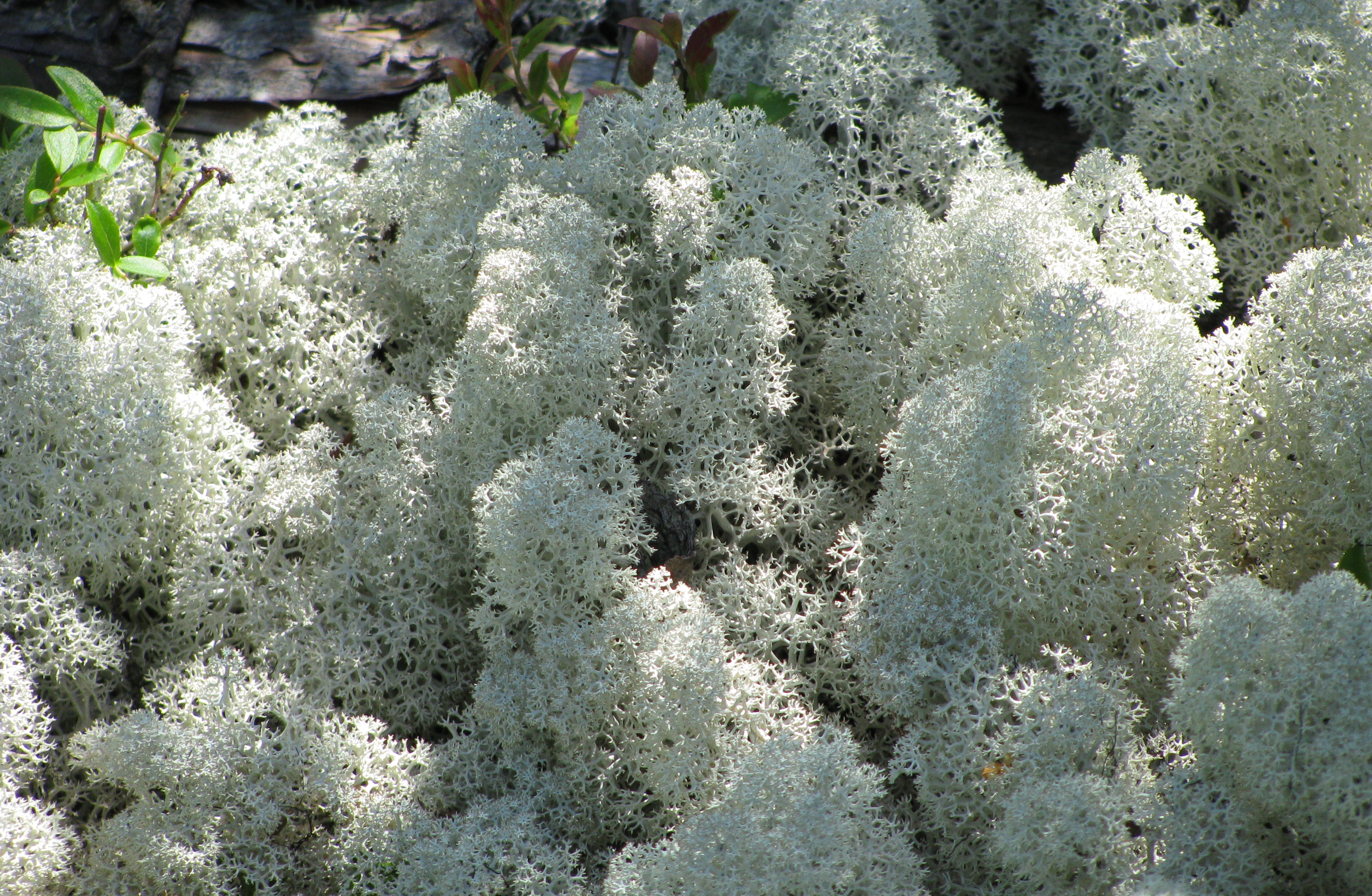
The vivid green leaves of Elk lichen resemble the curved horns of the animal for which it is named. They're silky-cool and have a delicate mushroom flavor and almost berry-like piquancy. The spindly, white branches of Reindeer lichen are crunchy and mildly bitter when cooked.
“The ladies know which are good for different dishes,” says our nature guide Tina Ollanke.
“You keep saying, ‘the ladies.’ Do only women do this work?” I ask.
“Pretty much,” she answers. “The men take care of the hunting and fishing, and the women forage.”
“That’s awfully traditional,” I remark, sounding thoroughly North American.
“It is,” she says. “We used to think it’s so old-fashioned, but now that my friends and I are getting older, we like to go to the woods on the weekends, stay in a cabin with some wine…”
“And you forage?”
“Yes, it’s fun.” She leads us to a patch where the Elk lichen and Reindeer lichen grow side by side.

After about half an hour of picking berries and mushrooms, sticking my fingers in the dirt and pulling lichen, I start to get her point. It’s almost like a game.
Daniel Patterson hands me a leaf of Elk lichen and says, “Here, taste this. It’s phenomenal stuff.”
I respond with a questioning look that says, “Is this okay to eat raw?” and warily place a piece on my tongue.
Why hadn’t I ever eaten this before?
In truth, I’d never thought of it as food for humans. I’d known that lichen was a plant-like organism, an abundant hybrid occupying the nebulous space between fungus and algae. I’d heard that it had been eaten in Japan during times of famine, but I never dreamed it could be used to create dishes as magical and innovative as the ones I experienced at Cook it Raw last week.
Yoshihiro Narisawa used different varieties of it in a poetic reconstruction of the forest floor. Claude Bosi wrapped swathes of it around baby potatoes before baking to infuse them with smoky, organic umami. Petter Nilsson and Inaki Aizpitarte fried it quickly in butter to finish their dish of smoked white fish and beet topped with consommé and berries. It was the final note that brought further harmony to an already harmonious composition.
The lichen was here, there, everywhere -- and it was delicious.

amuse bouche des Alpes (pour 3 personnes)
l/4 litre de bouillon de légumes (cf. recette ci dessous) l/4 l de lait écrémé 10 g de bouillon de poule (Maggi) 5 g de sucre Poivre du moulin 3 g de sel.
Lichen d'altitude ( à 1500 m du côté d'Annecy cueilli dès 5h30 du matin) 15 g de guimauve pour 20 g de lichen (à peu près même proportion de mousse et de liquide) 10 mn d'ébullition pour serrer les arômes.
Porter à ébullition puis rajouter la poudre de guimauve pour gélifier l'amuse bouche à présenter en apéritif.
Impératif : acquérir un siphon qui permet d'économiser et de donner un aspect aérien et léger à cette recette au parfum sauvage obtenu grâce à l'ajout de cet étonnant lichen.
Bouillon de légumes (3 litres)
2,5 litres dÕeau
50 cl de bon vin blanc
3 grosses carottes
l/2 gros oignon
1 bouquet garni (thym, laurier persil, fenouil, etc.)
1 blanc de poireau
1 morceau de sucre
http://fr.wikipedia.org/wiki/Fichier:Cladonia-stellaris-lichen-caribou.JPG


Aucun commentaire:
Enregistrer un commentaire